
Site Hits: 36,295,718
Site Hits: 36,295,718



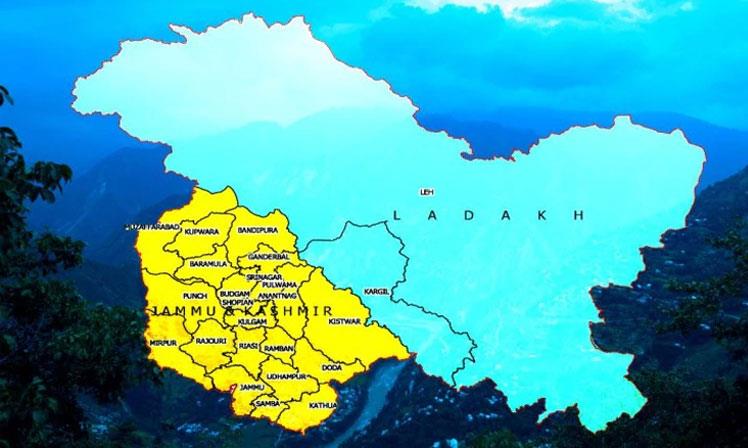
Aug 25, 2025: Overnight, it rained heavily in most of Jammu and Kashmir, flooding residential areas, causing widespread damage to infrastructure, and disrupting road connectivity. At 8:30 a.m., Jammu received 190.4 mm of rain, which was the second-highest August rainfall in over a century. The all-time record remains 228.6 mm, set on August 5, 1926, while the previous second-highest was 189.6 mm, recorded on August 11, 2022.
Not only were low-lying areas inundated by the torrential downpour, but it also caused a bridge on the Jammu-Pathankot National Highway to collapse, forcing authorities to divert traffic and putting emergency services on high alert. To prevent collisions, the highway's traffic was immediately stopped, but it was later rerouted in a different direction. As floodwaters entered power substations and disrupted the supply of electricity, there were reports of power outages in several parts of Jammu City.
Omar Abdullah, the chief minister, ordered all relevant departments to remain on high alert. He emphasized the significance of interdepartmental coordination and the maintenance of fully functional and responsive control rooms. According to Abdullah, restoring drainage systems, resuming essential services like water and electricity, and clearing areas that have become clogged with water are being given special priority. In the city of Jammu, several major roads were submerged, significantly disrupting traffic flow. Floodwaters entered homes in a number of areas, including Janipur, Roop Nagar, Talab Tillo, Jewel Chowk, New Plot, and Sanjay Nagar, as a result of overflowing streams. Several homes' boundary walls gave way, and flash floods swept away nearly a dozen vehicles. Due to the heavy rain, a culvert at the Jammu bus stand's exit gate collapsed, as did a portion of a road near a temple near the Tawi Bridge. A government school building in the Mahanpur area of Kathua was also damaged.
From August 24 to August 26, the Meteorological Centre in Srinagar issued an advisory warning of heavy to very heavy rainfall in several locations. People were urged to avoid riverbanks and vulnerable areas due to the possibility of cloudbursts, flash floods, and landslides in the advisory. Water levels in major rivers and streams in Samba, Kathua, Doda, Kishtwar, Ramban, and Jammu rose sharply, leading the administration to place disaster response teams and local police on high alert.
Jal Shakti Minister Javed Ahmed Rana convened a meeting with Chief Engineers and senior officials to assess flood preparedness. He reviewed emergency response infrastructure, especially in flood-prone areas, and directed round-the-clock monitoring of water levels in major river systems, including the Jhelum, Ravi and Tawi rivers and their tributaries.
In the meantime, Dr. Devansh Yadav, the commissioner of the Jammu Municipality, visited the city's rain-affected areas. He directed the Engineering, Transport, and Sanitation divisions of the Jammu Municipal Corporation (JMC) to begin restoration work on a wartime foundation.







Leave a comment: (Your email will not be published)